At Pentillion Construction, I implemented a Trello-based maintenance management and documentation system for recurring work across a dozen commercial properties. The work involved routine inspections, seasonal tasks, urgent repairs, subcontractor follow-up, site-specific knowledge, safe work practices, and a lot of small details that needed to be available when someone was actually on site.
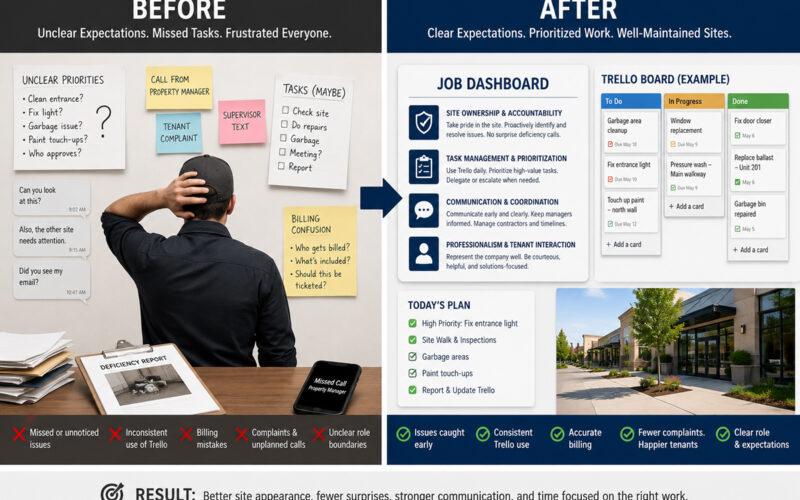
I had previously worked in the maintenance technician role myself, so I understood how quickly the work could become difficult to track when the system depended on phone calls, personal notes, memory, and individual site knowledge. A technician might visit several properties in a day, deal with routine checks, unexpected issues, tenant concerns, small repairs, and subcontractor coordination, then still need to remember what should happen next week, next month, or next season.
The problem was not that people were not trying. The problem was that too much important information lived in separate places. If a task, photo, decision, manual, contact, or site detail only lived in one person’s memory or text messages, it was too easy for context to be lost, the same questions to be asked repeatedly, or follow-up work to become invisible.
Building the boards around the real maintenance workflow
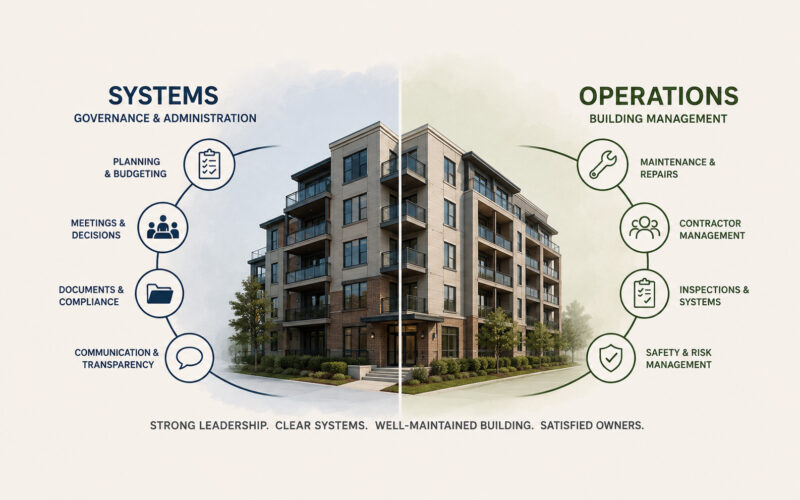
I structured the system with dedicated Trello boards for each site and a general knowledge board for shared procedures, sourcing information, contacts, safe work practices, and recurring references. Each site board was organized to track active tasks, completed work, projects, recurring templates, and site information.
Cards became the working record for each issue or task. They could hold checklists, photos, comments, links to manuals, storage locations, water shutoff information, sourcing notes, and other details that are easy to lose but important when someone is standing in the building trying to solve the problem.
The system was designed around how maintenance actually happens. Weekly, monthly, and seasonal template cards could be copied into the active task list with due dates, keeping recurring work visible before it became urgent. The recurring work included items such as filter changes, bird checks, vacancy checks, janitorial reviews, fire and generator tests, exterior lighting checks, pest inspections, equipment servicing, salting preparation, annual fire and pump checks, anchor inspections, painting reviews, and pressure washing reviews.
Making responsibility and follow-up visible
I also built the workflow around accountability. Cards are assigned to the person responsible for seeing the task through. Priority labels help show what needs attention first, and subcontractor labels identify work that requires outside follow-up.
That structure matters because maintenance work often fails at the handoff. Someone notices an issue, someone else talks to a subcontractor, another person waits for a quote, and then the original context disappears. Keeping comments, photos, due dates, labels, and assignments on the same card makes the work easier to pick back up without needing a separate explanation.
The photo history became another important part of the system. Photos could document problems, site conditions, completed work, recurring issues, and past repairs. That created a practical historical record for planning, liability, trend review, and training.
Extending Trello with n8n reporting
Trello’s built-in automation handled some recurring task creation, but it had limits when the system had to scale across multiple users and sites. To extend it, I connected Trello to n8n and used API queries and filtering to build custom reporting.
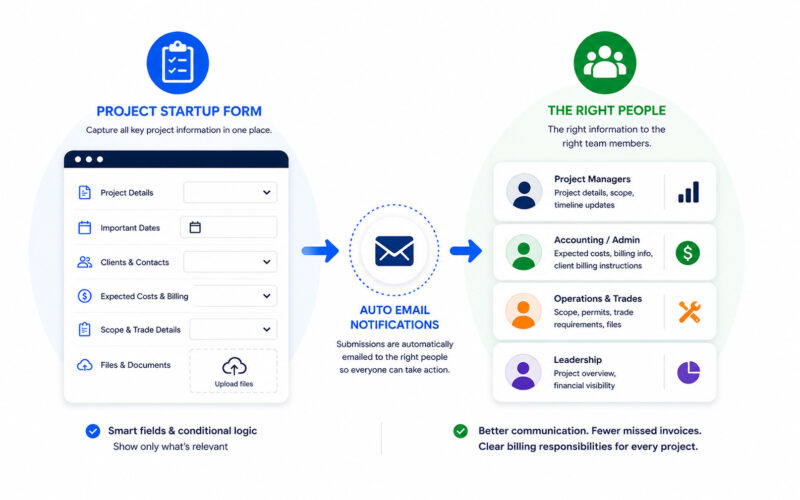
The system can send HTML email reports with direct links back to the relevant Trello cards. Reports can summarize completed work, upcoming tasks, overdue items, assigned responsibilities, due dates, labels, subcontractor follow-up, and other filtered information across all sites.
A weekly report gives a snapshot of what was completed and what still needs attention. Upcoming-task emails help keep maintenance visible before it becomes urgent, making it easier for the technician to plan ahead, pick up materials, or coordinate subcontractors before arriving on site. Reports can also be tailored for different people depending on their role, including the maintenance technician, me acting as maintenance manager, and ownership.
Creating a company knowledge base
The maintenance system also became a knowledge base. It gave the company a practical place to store manuals, procedures, site-specific details, photos, sourcing notes, contacts, and institutional knowledge that would otherwise stay with whichever person happened to know it.
That made the system useful beyond daily task tracking. It helped new people learn the sites faster, gave management better visibility into maintenance activity, and created a stronger record of what was done, when it was done, and why.
Handoff and refinement
This project combined my experience in the maintenance role with process improvement, workflow design, documentation, automation, training, and hands-on implementation. I designed the board structure, templates, labels, due-date logic, automations, reporting, documentation, and training materials, then continued checking in with users to refine the system around how the work actually gets done.
Information needs a home
The result was a maintenance workflow that captured more site knowledge, made responsibilities clearer, improved follow-up, reduced reliance on individual memory, and helped recurring work stay visible.
This is one of the clearest examples of the kind of system I like building. The system is useful because it gives people an operating structure: less lost context, better handoff, clearer accountability, and enough automation that important work is harder to forget.