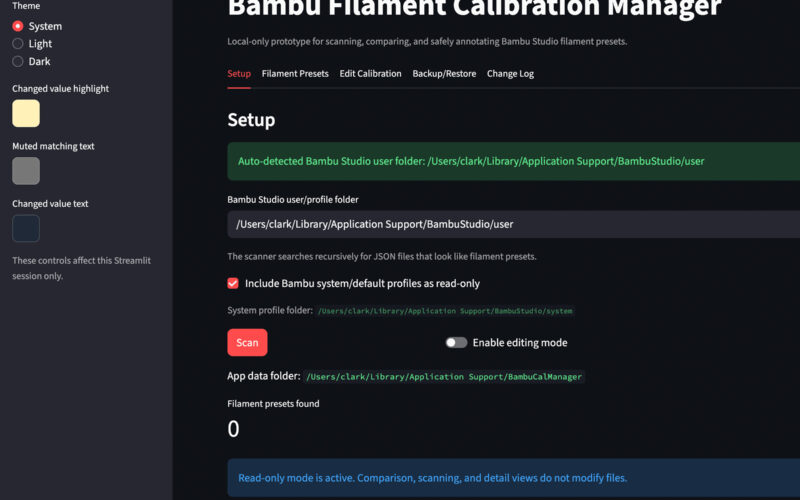
3D printing filament calibration dashboard
Built a local Bambu Studio dashboard to review filament presets, compare calibration values, flag near-duplicates, and track K / Flow Dynamics records.
Digital Tools & Systems
Built a shared fitness challenge that pulls Garmin activity data into Google Sheets, calculates weekly standings and penalties, and sends automated daily updates for a playful date-night accountability system.
My wife and I wanted a fun way to stay accountable with our fitness goals, so I built a shared challenge that turns Garmin activity data into a weekly scoreboard, a date-night fund, and a small amount of competitive pressure.
The rules are simple. Each week, the person with the fewest Garmin intensity minutes contributes $50 to the date-night fund. Zone 5 training minutes count double, so harder training gets extra credit. Each person is also expected to complete two weight-training sessions per week, and missing one adds another $25 penalty. After four weeks, the winner chooses the date night and can delegate the planning and organizing to the other person.
That structure made the challenge playful instead of purely punitive. The “penalty” still goes toward something shared, and the four-week cycle gives the challenge a clear finish line before it starts again.
The system only works if the tracking does not become a chore, so I automated the boring parts. Scripts pull activity data from Garmin, sync it into Google Sheets, backfill historical activity, calculate weekly standings, apply the contribution rules, and send a daily email showing who is ahead, who is behind, and what needs to happen before the week ends.
Google Sheets became the visible scoreboard and rule engine. It keeps the calculations transparent enough that the challenge does not feel like a black box, while the automation removes the need to manually copy workouts, compare activity minutes, or remember to send updates.
The daily email is a key part of the design. It makes the challenge visible without requiring either of us to open a dashboard every day. That small reporting loop keeps the system present in normal life and makes it easier to adjust before the end of the week.
This is a personal project, but the pattern is transferable: define the behaviour you want, make the rules visible, automate the tedious parts, and turn feedback into something people actually pay attention to. In this case, the result is a fitness challenge that supports consistency, competition, and date nights without creating another manual tracking task.
Related
A few related projects with the same kind of problem-solving thread.
Built a local Bambu Studio dashboard to review filament presets, compare calibration values, flag near-duplicates, and track K / Flow Dynamics records.
Digital Tools & Systems
As my 3D printing setup got more capable, Bambu Studio’s filament presets became harder to manage. I built a local dashboard that scans preset files, compares key settings, highlights near-duplicates, and makes calibration data easier to review across nozzles, hotends, toolheads, and materials.
The dashboard makes hidden or scattered calibration information visible. It scans Bambu Studio preset files, shows the settings that affect real printing decisions, compares profiles side by side, and highlights differences in flow ratio, maximum volumetric flow, temperatures, cooling, and K / Flow Dynamics values.
A key design choice was to keep calibration notes portable and human-readable. Instead of relying only on less visible printer-side records, the tool stores K-value notes in a structured block inside the existing filament notes field while preserving anything already there.
I built it in Python with a Streamlit interface. Because it edits local preset files, the workflow creates backups, validates JSON, and logs changes before writing. The dashboard complements Bambu Studio by making the important preset information easier to see, compare, clean up, and trust.
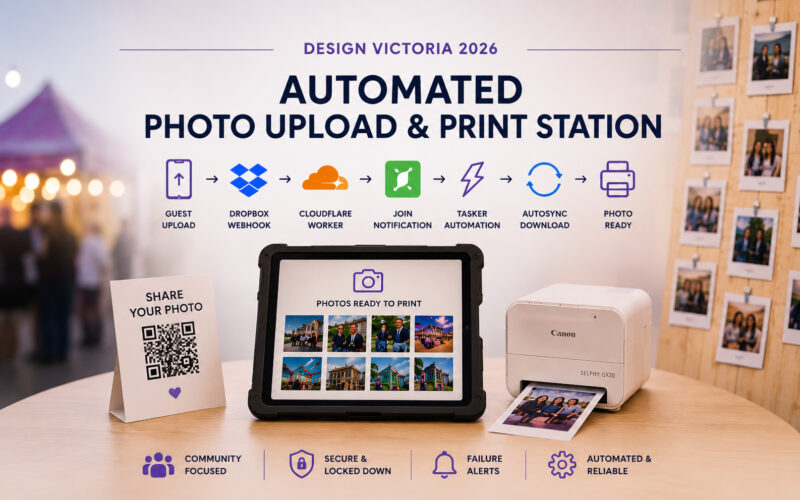
Built a QR-code photo upload and print workflow so event guests could submit images and volunteers could print them without manual file handling.
Digital Tools & Systems
For The Big DV public installation, I built a QR-code photo upload and print workflow so guests could submit images from their phones and volunteers could print them with minimal handling. Behind the simple public interaction was a low-cost automation chain connecting cloud uploads, webhooks, Android automation, file sync, kiosk setup, privacy controls, and fallback alerts.
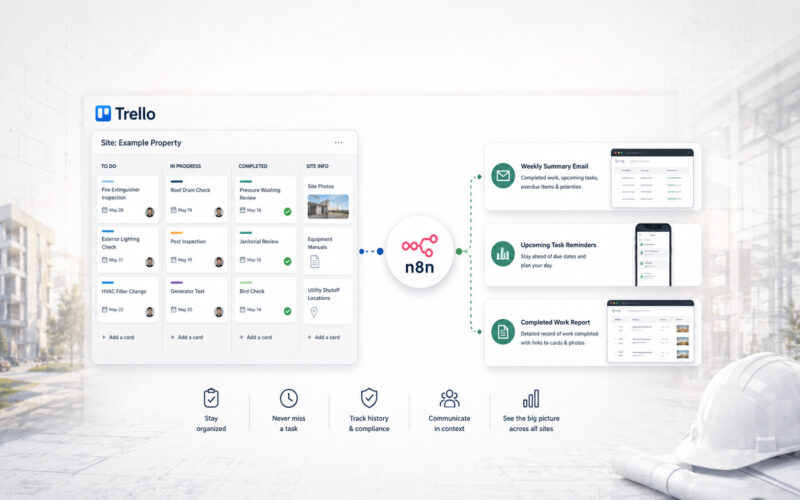
Built a Trello-based maintenance system for recurring inspections, site knowledge, work history, subcontractor follow-up, and automated reporting across commercial properties.
Digital Tools & Systems
At Pentillion Construction, I implemented a Trello-based maintenance management and reporting system for recurring work across a dozen commercial properties. The system replaced phone calls, personal notes, and memory-based tracking with site-specific boards, recurring templates, photo documentation, manuals, procedures, accountability labels, and automated n8n reporting.