Trello-based maintenance management system
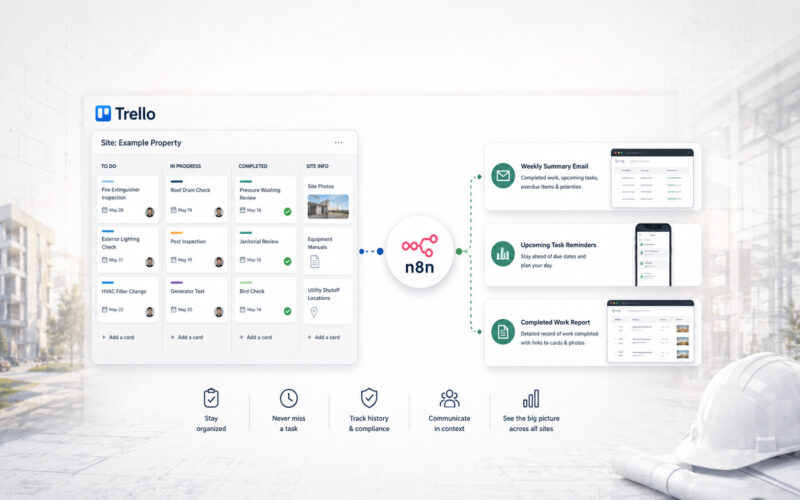
Built a Trello-based maintenance system for recurring inspections, site knowledge, work history, subcontractor follow-up, and automated reporting across commercial properties.
Digital Tools & Systems
Built an internal project-startup workflow that captured awarded-work details, billing responsibilities, expected costs, permits, contacts, and file uploads into a clearer handoff between project managers and office administration.
As Process Improvement Manager at Pentillion Construction, I built an internal project startup workflow to improve the handoff between a project being awarded and the information needed to manage, bill, and administer the work.
Before the workflow, project information could be scattered across conversations, emails, estimates, and individual memory. One person might know the billing arrangement, another might know the site contact, and accounting might not have enough context to set up the job or invoice correctly. That created avoidable friction at exactly the point where the project needed to start cleanly.
The startup workflow was designed to make that information explicit. It captured project status, project lead, client and site contacts, expected costs, billing responsibilities, important dates, scope notes, permit requirements, file uploads, and trade-specific details. It also helped handle more complicated billing situations where costs might be split between property managers, tenants, landlords, or other clients.
I built the form with auto-populated dropdowns and conditional logic so it was easier to complete and did not ask every user every possible question. The form changed based on the project information being entered, which made it more practical for real use and reduced the chance that people would skip it because it felt too cumbersome.
I also configured the workflow so submissions were automatically emailed to the people who needed the information. That helped project managers, office administration, and accounting see new work earlier and with more consistent context.
The result was a clearer startup process for awarded work. The workflow reduced reliance on informal handoff, helped accounting understand billing requirements earlier, reduced the chance of missed invoices, and made complex project setup easier to coordinate. It was a small internal system, but it addressed a real operational problem: getting the right information to the right people before gaps turned into project or billing issues.
Related
A few related projects with the same kind of problem-solving thread.
Built a Trello-based maintenance system for recurring inspections, site knowledge, work history, subcontractor follow-up, and automated reporting across commercial properties.
Digital Tools & Systems
At Pentillion Construction, I implemented a Trello-based maintenance management and reporting system for recurring work across a dozen commercial properties. The system replaced phone calls, personal notes, and memory-based tracking with site-specific boards, recurring templates, photo documentation, manuals, procedures, accountability labels, and automated n8n reporting.
Created a plain-language maintenance performance dashboard that turned a broad property role into clear expectations for ownership, tasks, communication, and professionalism.
Digital Tools & Systems
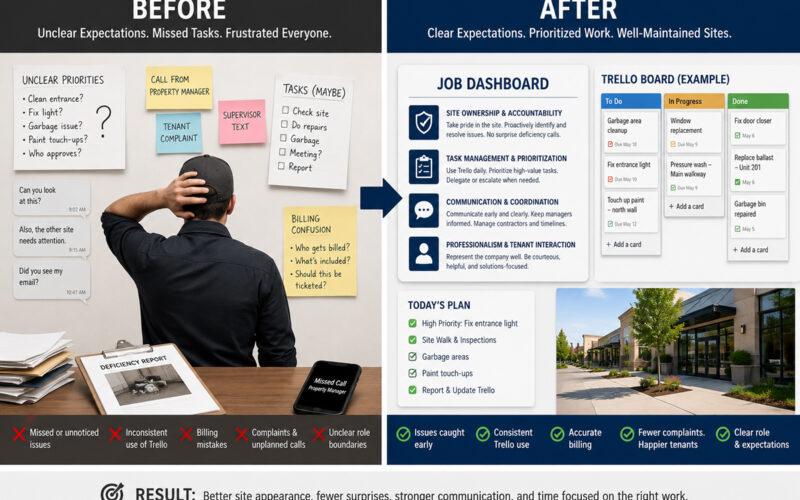
At Pentillion Construction, I created a job dashboard for the Property Maintenance Technician role so expectations were clearer across roughly a dozen commercial properties. The dashboard turned a broad, sometimes thankless maintenance role into four plain-language performance areas with expectations, indicators, and reflection prompts that could support onboarding, coaching, and fairer performance conversations.
The maintenance role covered a wide range of work across outdoor malls, tenant spaces, and mixed-use sites: routine inspections, garbage removal, cleaning, minor repairs, contractor coordination, task tracking, and responses to issues raised by tenants, property managers, and owners. Good maintenance often goes unnoticed, but small visible issues like mud on a front door, overflowing garbage, or damaged finishes can quickly create complaints and reduce confidence in the maintenance team.
I identified that the role needed clearer shared expectations. Technicians were not just completing tasks; they needed to take ownership of their sites, understand priority and billing boundaries, use Trello consistently, communicate before problems escalated, and know when work should be escalated or subcontracted instead of handled in-house.
I created a job dashboard that condensed the role into four key performance areas: Site Ownership & Accountability, Task Management & Prioritization, Communication & Coordination, and Professionalism & Tenant Interaction. Each area included a plain-language summary, detailed expectations, measurable indicators, and reflection prompts that could be used for onboarding, coaching, and performance discussions.
The value was role clarity. The dashboard gave the technician and management a shared reference point for what success in the maintenance technician role looks like. It helped reduce billing mistakes, encouraged more consistent Trello use, improved onboarding, and gave management a fairer way to evaluate performance around the larger operational goal: maintenance should create confidence.
Built a shared fitness challenge that pulls Garmin activity data into Google Sheets, calculates weekly standings and penalties, and sends automated daily updates for a playful date-night accountability system.
Digital Tools & Systems
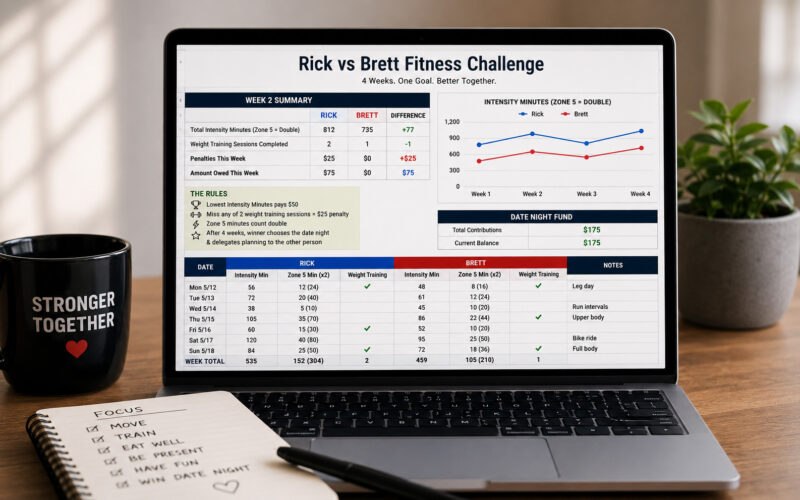
My wife and I wanted a fun way to stay accountable with our fitness goals, so I built a shared challenge using Garmin data, Google Sheets, and automated daily emails. The system tracks intensity minutes, doubles Zone 5 training, applies weight-training penalties, and keeps a running scoreboard for a date-night fund.
The challenge is simple enough to understand without needing the spreadsheet open. Each week, the person with the fewest Garmin intensity minutes contributes $50 to the date-night fund. Zone 5 training minutes count double, and each person is expected to complete two weight-training sessions per week. Missing one adds another $25. After four weeks, the winner chooses the date night and can delegate the planning to the other person.
The system only works if tracking does not become another chore, so I automated the boring parts. Scripts pull activity data from Garmin, sync it into Google Sheets, backfill historical activity, calculate weekly standings, apply the rules, and send a daily email showing who is ahead, who is behind, and what still needs to happen before the week ends.
No more skipping leg day. I wanted motivation to feel visible and playful. The shared date-night fund makes the consequence positive, the daily email keeps the challenge present without manual checking, and the spreadsheet keeps the rules transparent. The automation reduces enough friction that the habit becomes easier to keep doing.