Photo frame guessing game
Built a laser-cut photo-frame guessing game with flipping tiles, integrated card storage, and a browser crop tool for printable photo sheets.
Products & Devices
Designed two 3D-printed espresso tools: a flexible TPU puck ejector and a parametric tamper station sized around real portafilter dimensions.
After switching to a bottomless portafilter, I ran into two small but persistent workflow problems that did not have good off-the-shelf answers for my setup.
The first problem was cleanup. The spent espresso puck would not always come out cleanly, even with a knock box. I designed a flexible TPU ejector that seals against the bottom of the portafilter basket. A quick smack creates enough air pressure to push the grounds out cleanly into the compost.
The second problem was fit. I wanted a tamping station that actually matched my portafilter, but many printable holders online describe compatibility by brand or general size without exposing the dimensions that matter. In practice, the fit depends on details like basket diameter, ear geometry, handle angle, saddle height, and counter clearance.
To make the design more adaptable, I created a parametric OpenSCAD tamper station. Instead of remodelling the holder for every variation, the key dimensions can be measured, entered, and regenerated for a specific portafilter setup.
This is a small project, but it captures a useful design pattern: solve the immediate problem, identify which dimensions actually control fit and function, and turn the solution into something adjustable enough to be reused instead of rebuilt from scratch.
Related
A few related projects with the same kind of problem-solving thread.
Built a laser-cut photo-frame guessing game with flipping tiles, integrated card storage, and a browser crop tool for printable photo sheets.
Products & Devices
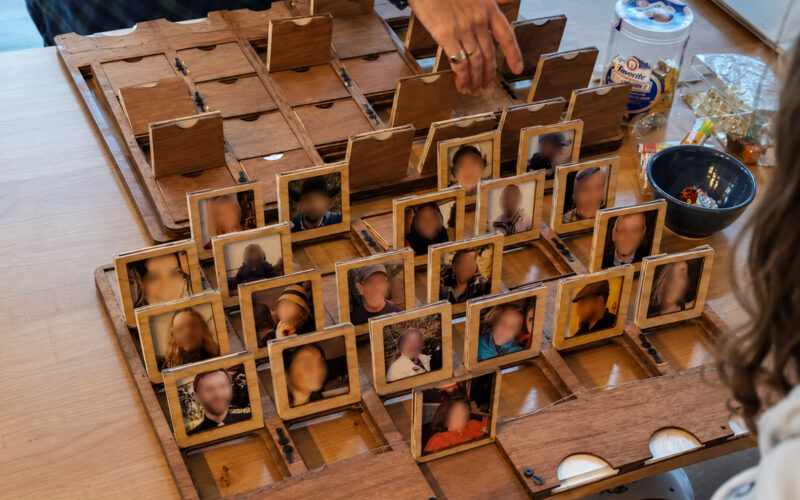
Remember this game? I designed and built a custom photo-frame guessing game as a personal gift, using real photos of family, friends, and pets. The finished piece was laser cut from layered plywood, assembled by hand, and designed to work both as a playable game and a displayable photo frame.
Sometimes I go overboard with Christmas presents. The flipping tiles needed to move smoothly, the layers had to align cleanly, and the matching photo cards needed integrated storage so the game stayed self-contained.
Preparing the photos became its own workflow problem, so I built a small browser-based crop tool that turned inconsistent source images into consistent portrait squares and arranged them onto printable 4 by 6 layouts. That means the game can be updated with new memories over time instead of being locked to the first photo set.
The nostalgic gift became a mix of product design, fabrication, woodworking, and lightweight web-app development.
Designed a small 3D-printed magnet holder that used an unused door-reversal feature on a fridge to pull the door closed the last little bit, letting the gasket seal take over.
Products & Devices
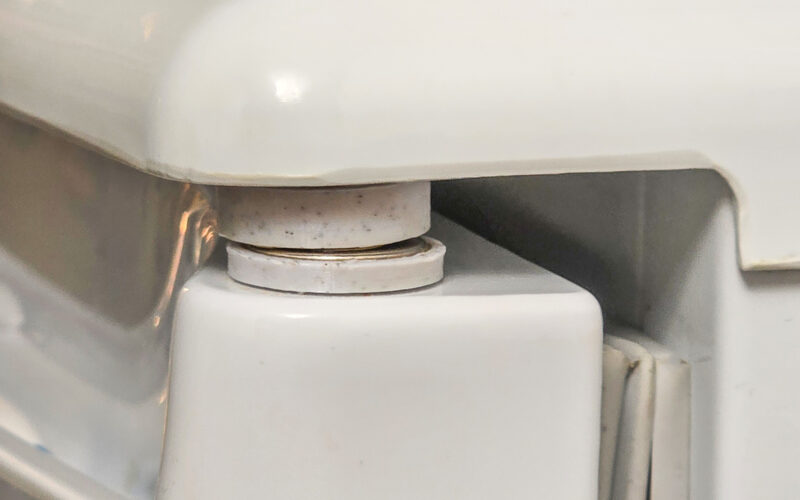
When my fridge door would not always pull itself fully closed, I considered more complicated fixes like tilting the fridge, adding an alarm, or designing a retracting magnet. Then I noticed an unused mounting point from the reversible-door design and 3D printed a small holder for rare earth magnets that pulls the door closed just enough for the gasket to seal.
Fixed a fridge freezing problem by using thermal imaging to find cold-air pooling, then adding a low-voltage fan on a custom 3D-printed bracket with a thermal switch.
Products & Devices
My Danby all-fridge was freezing food on the lower shelf while the rest of the fridge stayed at a normal temperature. Using a thermal camera, I found that cold air was pooling near the lower back of the fridge because the unit relies on natural convection rather than a built-in circulation fan.
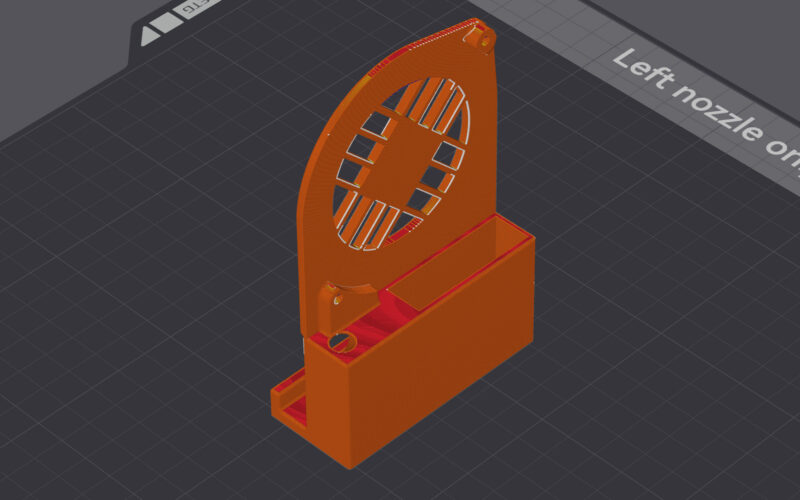
The drain was clear, and everything else in the fridge seemed to be operating properly. I traced the problem to restricted airflow and added a small low-voltage fan on a custom 3D-printed bracket to gently circulate air through the cabinet. I also added a small thermal switch attached to the compressor, so the fan only runs when the fridge is actively cooling.
It’s a simple fix, but it solved a frustrating problem by understanding how the system was actually behaving and making a targeted improvement. Now I have no excuse not to eat my vegetables.