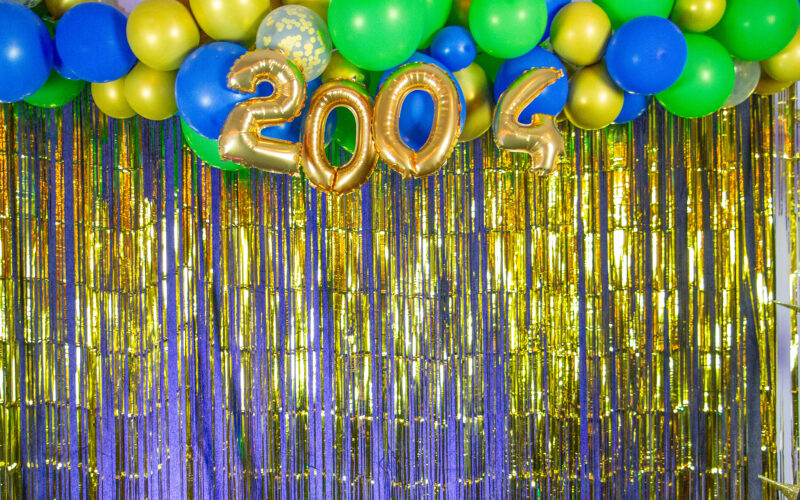
High school reunion planning and event coordination
Organized two large high school reunions with communications, volunteers, ticketing, venue logistics, safety planning, entertainment, and participant experience.
Creative & Community
Helped support a small Brazilian Zouk-rooted partner dance community in Victoria through practice sessions, informal teaching, event support, music sharing, and a welcoming approach to learning.
I help support a small Brazilian Zouk-rooted partner dance community in Victoria by creating spaces where people can practise, ask questions, make mistakes, and keep coming back.
This is not a formal dance business, and I do not present myself as the authority on Brazilian Zouk in Victoria. I am one person helping a community grow by organizing practice opportunities, sharing what I have learned, and helping people feel more connected to the music, their movement, and each other.
The work is practical as much as it is personal. I help organize practice sessions, support community events, share music, explain movement concepts, and help newer dancers feel less intimidated.
A small dance community only works if people feel welcome enough to participate. That means the tone of the space matters. People need room to experiment, get things wrong, laugh, try again, and gradually build confidence.
My role is often informal teaching and facilitation. I help break down movement ideas, explain what I am feeling in a lead or follow, and translate embodied concepts into language that people can use.
Partner dance can be technically complex, but the goal is not to overwhelm people with terminology. The goal is to give people enough understanding that the movement starts to make sense in their own body.
I describe this as Zouk-rooted partner dance because Brazilian Zouk shaped my foundation, while the music and movement I connect with often reach beyond one strict traditional container.
I try to be careful with that distinction. I am not claiming to represent Brazilian culture or formalize the dance for everyone else. I am sharing the parts I have learned, the music I connect with, and the kind of practice space I think helps people grow.
For me, partner dance is a conversation between the music, my body, and another person. At first, it can look like one person leading and the other following. The more I learned, the more I understood it as both people following the music together. One person may suggest the movement more often, but both people are listening, interpreting, adapting, and expressing in their own way.
That is where the phrase “music made visible” comes from. A good dance is not just a sequence of steps. It expresses through timing, tone, space, weight, softness, contrast, and response. It turns something heard into something seen and felt.
This project is personal, but it says something real about how I communicate and build community. I like dancing with my wife. I like sharing something meaningful with other people. I like seeing a group become friends as well as dancers.
It also shows a useful capability: taking something complex, embodied, and hard to explain, then making it accessible enough that more people can join in. It is another form of facilitation, translation, and sensemaking.
Related
A few related projects with the same kind of problem-solving thread.
Organized two large high school reunions with communications, volunteers, ticketing, venue logistics, safety planning, entertainment, and participant experience.
Creative & Community
I organized my 10-year and 20-year high school reunions by bringing together graduates from both Campbell River high schools into inclusive events of roughly 140 people. The work involved tracking down former students, coordinating volunteers, budgeting, ticket sales, food and drinks, safety planning, entertainment, and the details that make an event feel welcoming rather than thrown together.
The events required the same kind of practical coordination that shows up in my professional work, just in a more personal setting. I managed communications, recruited volunteers, organized ticketing, coordinated food and drinks, arranged a safe-ride-home shuttle, planned security and liquor-licence requirements, set up supplies, booked a photographer and DJ, built a slideshow, and added games and activities to help people reconnect.
I wanted more than a party. I wanted a safe, inclusive, well-run community event where people from both schools felt welcome showing up.
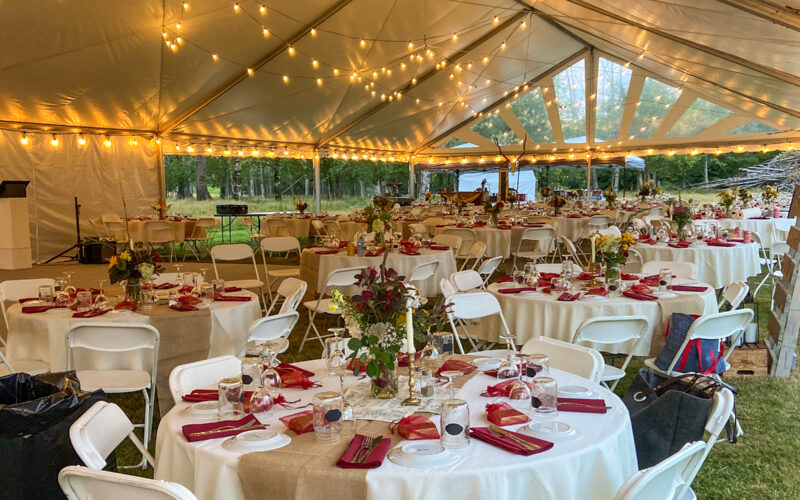
Built a temporary 240-guest farm wedding venue with camping, parking, washrooms, water, power, lighting, a large tent, live music, and a custom dance floor.
Creative & Community
For our wedding, my wife and I turned an overgrown working farm into a temporary private venue for 240 guests. The project involved long-range planning, site preparation, camping and parking layouts, washrooms, temporary water service, power distribution, and lighting. It also included a 100’ x 40’ tent, a custom 20’ x 32’ dance floor, live music, food service, volunteer coordination, and handmade guest experiences.
Designed a personal business card and identity system to make a broad mix of engineering, construction, design, communication, and practical problem-solving feel clear and connected.
Creative & Community
I designed my business card as a compact expression of how I work: make things, make sense of things, and carry ideas through to completion. The project turned a broad professional identity into a physical card using geometry, colour, language, proportion, and a clear working philosophy.
The card needed to do more than hold my name and contact information. It had to communicate a broader professional identity: engineering, project management, construction, design, communication, systems thinking, and practical follow-through, without making the work feel scattered.
The central challenge was clarity. My work crosses different domains, so the card had to create a thread that tied them together. I wanted it to feel professional and capable, but still human, creative, and specific to me.
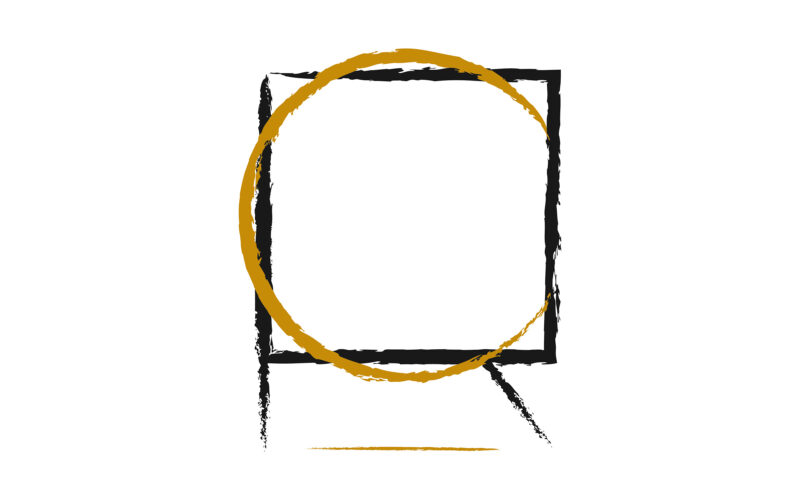
The logo combines my initials, R and C, with references to squaring the circle, the golden ratio, and a 3-4-5 triangle. Those references connect the identity to philosophy, mathematics, construction, and design. The geometry is not there as decoration; it reflects the way I tend to approach work: look for structure, understand the constraint, and find a practical path forward.
The sketched line quality was intentional. I did not want the mark to feel overly polished or sterile. The slightly drawn quality suggests thinking, iteration, and problem-solving in progress. It keeps the identity connected to the process of working through an idea, not only the final result.
The colour palette reinforces the same idea. The charcoal grey has a pencil-lead quality, which connects to sketching, drafting, and working something out by hand. The deep construction-gold adds warmth, value, and a practical built-environment association. The two-tone name treatment connects directly back to the logo so the initials and wordmark feel like one system rather than separate graphic elements.
The back of the card centres on the phrase “Make It / Make Sense.” I like the phrase because it carries two meanings at once. It speaks to making, building, and execution, but also to sensemaking, clarity, and communication. Separating the phrase into two lines turns a familiar expression into a simple statement of how I work.
The supporting line, “Design. Solve. Build. Deliver.” turns that philosophy into a process. It reflects the sequence I naturally bring to projects: understand the problem, design a response, solve the constraints, build the result, and deliver something that works.
This project is personal, but it supports the same idea as the rest of the portfolio. The card was a small physical object, but the design problem was the same kind of problem I often work on: make something broad and complicated clear enough that someone else can understand it, use it, and remember it.